
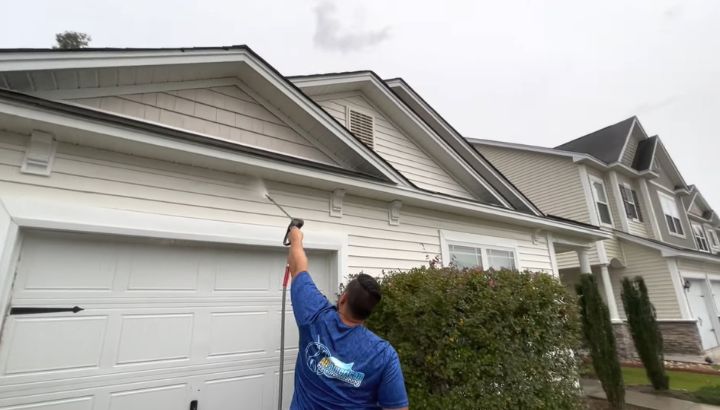
You can use an electric pressure washer in light rain, but it carries real electrical risks that require strict precautions including a GFCI outlet, covered power connections, and no standing water near the unit. Never operate any electric pressure washer during heavy rain, thunderstorms, or lightning, as water infiltration into the motor housing creates a genuine electrocution hazard. Check your machine’s IP rating before deciding, because waterproofing varies significantly between models and determines what weather conditions are actually safe.
Most people asking this question already have rain falling and a dirty surface waiting. The answer is not a simple yes or no. It depends on rain intensity, your machine’s water resistance rating, your electrical setup, and the safety precautions you follow.
This guide covers every factor that determines whether operating in wet conditions is safe, what risks exist if you get it wrong, and exactly what to do to protect yourself and your equipment.
The Real Answer: It Depends on These Specific Factors
The question of can I use an electric pressure washer in the rain does not have a universal answer. Several variables determine whether the situation is manageable or genuinely dangerous.
Rain intensity matters more than the fact that it is raining at all. Light drizzle creates a very different risk environment than a heavy downpour with pooling water on the ground around your feet and machine.
Your machine’s IP rating determines how much moisture intrusion the motor and electrical housing can tolerate before a fault occurs. Without knowing this number, you are guessing at a risk that carries serious consequences.
Understanding IP Ratings and What They Mean for Wet Conditions
IP stands for Ingress Protection. It is an international classification system that rates how well an electrical device resists solid particles and liquid penetration. The rating appears as two digits after the letters IP on the product specification sheet or label.
The first digit rates dust and particle resistance on a scale of 0 to 6. The second digit rates water resistance on a scale of 0 to 9. For pressure washer use in wet conditions, the second digit is the number that matters.
A rating of IPX4 means the device can tolerate water splashing from any direction. IPX5 means it handles low-pressure water jets. IPX6 and above means it withstands powerful water jets and heavy rain without damage to electrical components.
What IP Rating Your Pressure Washer Needs for Rain Use
Most consumer electric pressure washers carry an IP rating of IPX4 or IPX5. This means they can handle incidental water contact and light splash from operating the machine itself, including water deflecting back from the cleaning surface.
IPX4 is adequate for light drizzle provided the power connections remain protected and the machine is not sitting in standing water. IPX5 provides more confidence in moderate rain but still does not justify use in heavy downpours.
Machines with no published IP rating should never be used in any rain conditions. The absence of a rating means the manufacturer has not tested or certified the unit for any level of moisture exposure beyond normal dry-weather operation.
Electrical Hazards That Make Rain Genuinely Dangerous
Water and electricity share the same operating environment during any rain-condition pressure washing session. Understanding exactly where the hazard points are helps you either eliminate them or recognize when conditions are too dangerous to proceed.
Why GFCI Protection Is Mandatory in Wet Conditions
A GFCI outlet, or Ground Fault Circuit Interrupter, detects current imbalance as small as 5 milliamps and cuts power within 25 milliseconds. At that threshold, the device trips before current reaches the level that causes cardiac arrest in a healthy adult.
In dry conditions, GFCI protection is a recommendation. In rain conditions, it becomes the non-negotiable minimum barrier between a manageable risk and a fatal one. Never operate an electric pressure washer in wet weather without confirmed GFCI protection on the circuit.
Test the GFCI outlet before every wet-weather session using the test and reset buttons on the outlet face. A GFCI that does not hold its reset should not be used under any circumstances, dry or wet.
Power Cord and Connection Vulnerability in Rain
The connection point between the power cord and the outlet is the most vulnerable electrical junction during rain operation. Even a brief moment of rainwater entering an unsealed outlet face or running along the power cord into the socket creates a ground fault condition.
Use a weatherproof outdoor outlet cover that remains closed around the cord during use, not just when the outlet is empty. These are inexpensive covers with a hinged housing that seals around the cord itself while still allowing it to pass through.
Keep the power cord elevated off the ground and routed away from any area where water is pooling. A cord lying in a puddle is a direct current path to the wet surface your feet are standing on.
Standing Water Around the Machine and Your Feet
Standing water on the ground around the pressure washer creates a conductive path between the machine housing and your body. Even a properly grounded machine with intact wiring creates dangerous conditions if standing water contacts a fault point and your feet simultaneously.
Wear rubber-soled, waterproof footwear during all rain-condition operation. This is not optional. Rubber-soled boots interrupt the potential current path between a ground fault and your body more reliably than any other single precaution.
Position the machine on elevated ground or a dry elevated surface whenever possible. Even raising it a few inches on a wooden pallet removes the base of the machine from direct water contact with pooling groundwater.
Conditions Where You Should Never Operate the Machine
Certain weather conditions make electric pressure washer use unacceptable regardless of IP rating, GFCI protection, or any other precaution. Recognizing these situations and stopping work is the correct decision every time.
Thunderstorms and Lightning: An Absolute Stop Condition
Never operate any outdoor electrical equipment during a thunderstorm. Lightning does not need to strike the machine or the outlet directly to cause a fatal outcome. A nearby ground strike sends current through the earth and up through any conductive path it encounters, including your feet.
Stop work and move indoors at the first sound of thunder or first visible lightning. The rule used by professional crews is simple: if you can hear it, stop. Do not wait for a second strike to confirm the storm is close.
The pressure washer itself also acts as a mild conductor in a lightning environment, with its water-connected metal components and power cord providing multiple pathways that increase individual exposure risk compared to simply being outdoors without equipment.
Heavy Rain With Pooling Water
Heavy rain that creates visible puddles around the work area changes the risk profile substantially compared to light drizzle. Pooling water around the machine base, along the power cord route, and under your feet creates multiple simultaneous ground fault paths.
Even a fully rated IPX5 machine with a GFCI outlet can contribute to a hazardous situation when water is actively pooling around all equipment contact points. Stop work, move the machine to covered storage, and resume after the rain passes and pooled water drains away.
Heavy rain also reduces visibility of the surface being cleaned and makes slip hazards significantly worse on already-wet paved surfaces. These practical operational concerns compound the electrical risk in heavy rain.
Any Condition With a Compromised Power Cord or Outlet
Inspect the power cord before every use and especially before any rain-condition session. A cord with cracked outer insulation, exposed copper, or a damaged plug should never be used in any weather condition, but particularly not in rain where moisture contacts the damaged area directly.
Replace damaged cords before resuming use. A replacement cord for most consumer pressure washer models costs between $15 and $40. The cost of ignoring cord damage in wet conditions is incalculable.
Comparing Risk Levels Across Different Weather Conditions
| Weather Condition | Risk Level | GFCI Required | Recommended Action |
|---|---|---|---|
| Dry, clear weather | Minimal | Strongly recommended | Normal operation |
| Light drizzle, no pooling | Low to moderate | Mandatory | Proceed with precautions |
| Moderate rain, some pooling | Moderate to high | Mandatory | Consider postponing |
| Heavy rain, active pooling | High | Mandatory but insufficient alone | Stop, postpone work |
| Thunderstorm or lightning | Extreme | Irrelevant | Stop immediately, move indoors |
| Post-rain, wet surfaces | Minimal electrical | Recommended | Normal operation with slip caution |
Practical Precautions for Light Rain Operation
When conditions are light drizzle and you have assessed the situation as manageable, a specific set of precautions reduces the remaining risk to an acceptable level for most experienced users.
Protecting the Power Connection Point
Cover the outlet connection point with a weatherproof in-use cover rated for outdoor use in wet conditions. These covers are available at any hardware store for under $15 and create a sealed housing around the cord-to-outlet junction that prevents rain from entering the socket face.
Position the covered outlet as high as practical, ideally at least 18 inches above ground level. This keeps the connection point above the level where rainwater could accumulate and contact the outlet face from below.
Drape the power cord over a hook, railing, or elevated support to keep it off the wet ground and away from water pooling in low spots. The cord should form a downward loop before the outlet rather than running directly along the wet surface.
Protecting the Machine Body During Operation
Position the pressure washer under a partial overhang, canopy, or pop-up shelter if available. Even a basic pop-up canopy over the machine significantly reduces the volume of direct rainfall contacting the motor housing and electrical components.
Keep the machine on an elevated, non-conductive surface rather than directly on wet concrete or grass. A rubber anti-fatigue mat, a wooden pallet, or a plastic tray all create a non-conductive buffer between the machine base and wet ground.
Do not leave the machine running unattended in rain conditions even briefly. Active supervision means you can detect water accumulation around the unit and move it before a fault condition develops.
Personal Protective Equipment for Wet Weather Pressure Washing
Rubber-soled waterproof boots are the highest-priority personal protection item for any wet-weather pressure washing session. Standard work boots with leather or fabric soles conduct electricity in wet conditions. Rubber soles interrupt the conductive path between a fault and your body.
Waterproof gloves provide a secondary barrier but should not be relied upon as the primary protection when the electrical risk is elevated. They are most useful for temperature comfort and grip in rain conditions.
Safety glasses remain mandatory in rain conditions. Raindrops and high-pressure spray combine to create a higher-density projectile environment than dry-weather operation, and eye protection remains non-negotiable regardless of weather.
Can You Use Extension Cord With Electric Pressure Washer?
How To Use An Electric Pressure Washer
How To Use Ryobi Electric Pressure Washer
Electric vs. Gas Pressure Washers in Wet Conditions
The question of rain safety often leads to comparing electric and gas units directly. Understanding how the risk profiles differ helps make an informed decision about which tool is appropriate for wet-weather cleaning work.
| Feature | Electric Pressure Washer | Gas Pressure Washer |
|---|---|---|
| Electrocution risk in rain | Present, requires GFCI and precautions | None from electrical source |
| Slip hazard in rain | Equal to gas | Equal to electric |
| Carbon monoxide risk | None | Never use indoors or under cover |
| IP weather rating | Varies, IPX4 to IPX5 typical | Not applicable to motor risk |
| Ease of moving to covered area | Higher, lighter weight | Lower, heavier unit |
| Performance in rain | Unaffected if electrical safe | Unaffected mechanically |
| Recommended for heavy rain | No | Possible but slip risk remains |
Gas pressure washers eliminate the electrocution risk entirely in rain conditions, which is a genuine advantage in wet weather. However, they introduce carbon monoxide risk if used under a canopy, in a garage, or any semi-enclosed shelter that limits ventilation.
Electric units are lighter and easier to reposition under cover quickly when weather changes. This mobility advantage matters when conditions shift from light drizzle to heavier rain during an active cleaning session.
What to Do If the Machine Gets Wet During Storage or a Sudden Downpour
Sometimes rain arrives unexpectedly during operation or a stored machine gets exposed to moisture before winterization is complete. Knowing the correct response prevents secondary damage from a bad situation.
If the Machine Gets Soaked Unexpectedly
Move the machine to a dry covered area immediately. Do not attempt to power it on to test if it still works. Applying power to a wet motor housing before it has dried forces current through moisture-bridged paths inside the electrical components and causes immediate or delayed fault development.
Allow the machine to dry completely in a warm, ventilated area for a minimum of 48 hours before testing operation. Place it with the motor housing vents facing downward to encourage any internally trapped moisture to drain by gravity rather than pooling at the base of the motor.
Drying Process Before Restarting
After the 48-hour drying period, inspect the power cord, outlet plug, and all visible electrical connection points for any visible corrosion, discoloration, or physical damage before attempting a test start.
If the machine sat in standing water for more than a brief period, consider having it inspected by a qualified small equipment technician before restart. Internal corrosion from prolonged water exposure to motor windings is not always visible externally and can cause faults on the first pressurized use.
Documenting Wet Exposure for Warranty Claims
If the machine was exposed to rain conditions beyond its rated IP protection level, document the exposure conditions, date, and any visible damage before contacting the manufacturer. Brands including Sun Joe, Greenworks, Ryobi, and Karcher all maintain warranty programs, but most explicitly exclude damage caused by operation outside the rated environmental specifications.
Keeping purchase receipts, model documentation, and IP rating information accessible means you can make an accurate warranty inquiry rather than starting from zero when contacting customer support.
Frequently Asked Questions
Is it safe to use an electric pressure washer in light rain?
Using an electric pressure washer in light rain is possible but requires specific precautions to be safe. Confirm your machine has an IP rating of at least IPX4, which certifies it can tolerate water splashing from any direction without electrical fault.
Always use a GFCI-protected outlet, cover the cord-to-outlet connection with a weatherproof in-use cover, and keep the machine elevated off pooling groundwater.
Wear rubber-soled waterproof boots to interrupt any potential ground fault path. Light drizzle with no pooling is manageable with these precautions in place. Heavy rain, standing water, or any thunder makes the answer an unqualified no.
What IP rating does a pressure washer need to use in rain?
A minimum IP rating of IPX4 is required for any rain-condition operation. IPX4 certifies the device can withstand water splashing from any direction without electrical fault or damage to internal components.
IPX5 provides greater confidence in moderate rain because it certifies resistance to low-pressure water jets in addition to splashing. Most consumer electric pressure washers fall in the IPX4 to IPX5 range.
Machines without a published IP rating should never be operated in rain conditions. The absence of a rating means the manufacturer has not certified the unit for any moisture exposure beyond normal dry-weather use.
Can I use an extension cord with my pressure washer in the rain?
You can use an extension cord in rain conditions only if it is a 12 or 14-gauge outdoor-rated cord with a waterproof connector housing at the junction point. Standard indoor extension cords with unprotected connection points are not suitable for any outdoor use in wet conditions.
Keep the cord-to-extension junction elevated off the wet ground and covered with a weatherproof connector housing or a dry plastic bag secured with a rubber band as a temporary measure.
Never use a cord longer than 25 feet for pressure washer operation. Longer cords create voltage drop that stresses the motor and increases current draw at the outlet, compounding the electrical risk in wet conditions.
Does rain affect the cleaning performance of a pressure washer?
Rain does not directly affect the mechanical cleaning performance of a pressure washer. The machine produces the same PSI and GPM output regardless of ambient weather conditions, and the additional water from rain on the surface being cleaned does not meaningfully dilute the cleaning action.
Visibility is reduced in moderate to heavy rain, making it harder to see whether cleaning passes are achieving results consistently. Slip hazards increase significantly on wet paved surfaces, particularly concrete and smooth stone.
Detergent dwell time can be shortened by heavy rainfall washing the applied soap away before it has had time to break down surface contamination. Apply soap quickly and rinse promptly in rainy conditions.
Should I cover my pressure washer if it starts raining during storage?
Yes. A pressure washer stored outdoors should always be covered with a waterproof machine cover rated for outdoor use. Exposed storage in rain causes corrosion on metal connection fittings, degradation of rubber O-ring materials from repeated wet-dry cycles, and gradual moisture infiltration into the motor housing vents.
Dedicated pressure washer covers are available for most popular models from Ryobi, Sun Joe, and Karcher directly, as well as from third-party manufacturers. Universal-fit covers work adequately for most consumer unit sizes.
Even with a cover, store the machine in a sheltered location such as a garage or covered patio rather than fully exposed to sustained rainfall and wind-driven moisture.
What should I do if my pressure washer gets caught in unexpected rain?
Move the machine to a dry covered area immediately and switch it off before moving it. Disconnect the power cord from the outlet before handling the machine in wet conditions to eliminate any shock risk during transport.
Do not restart the machine immediately after heavy rain exposure. Allow a minimum of 48 hours of drying in a warm, ventilated space before attempting a test start.
Inspect all connection points, the power cord, and the motor housing vents for visible moisture, corrosion, or physical damage before reconnecting power. If any internal moisture is suspected after prolonged rain exposure, have the unit professionally inspected before restart.
Can I use an electric pressure washer to clean in the rain if I stay under a canopy?
A canopy over your work position reduces direct rainfall on you and helps protect the machine from overhead rain exposure. It does not eliminate the electrical hazard if water is pooling on the ground around your feet and the machine, or if wind is driving rain horizontally under the canopy edge.
Ensure the canopy is not a conductive metal frame that could act as a lightning path if a storm develops. Pop-up canopies with fiberglass poles are preferable to aluminum-framed versions for this reason.
The canopy addresses rainfall on the machine but does not replace GFCI protection, weatherproof outlet covers, or rubber-soled boots. All standard wet-weather precautions still apply under a canopy.
Is a gas pressure washer safer than electric in rainy conditions?
Gas pressure washers eliminate the electrocution risk associated with electric units in wet weather. They have no power cord, no outlet connection, and no electrical components that create ground fault hazards in rain.
However, the carbon monoxide risk from gas unit exhaust introduces a different and equally serious hazard. Never operate a gas pressure washer under a canopy, in a garage, under a covered patio, or in any semi-enclosed area regardless of weather conditions.
For purely rain-related electrical safety, gas units have the advantage. For enclosed or semi-enclosed wet-weather work, neither unit type is appropriate and the work should be postponed.
How do I safely store a pressure washer outside in wet climates?
In consistently wet climates, outdoor pressure washer storage requires a waterproof machine cover, a sheltered position under a roof or overhang, and an elevated platform that keeps the machine base off direct contact with ground moisture.
Apply a light coating of corrosion inhibitor spray to all exposed metal fittings, connection ports, and the trigger gun body at the start of wet season storage. This prevents the rust formation that causes quick-connect fittings to seize and O-ring housing lips to corrode.
Inspect the machine every four to six weeks during prolonged storage to confirm the cover remains intact, no moisture has accumulated inside the cover, and no rodent or insect activity has damaged cord insulation or housing components.
Conclusion
The direct answer to can I use an electric pressure washer in the rain is yes in light drizzle with strict precautions, and no in heavy rain, thunderstorms, or standing water conditions.
GFCI protection, a weatherproof outlet cover, rubber-soled boots, and a machine with a minimum IPX4 rating are the non-negotiable requirements for any wet-weather operation. Remove any one of these and the risk profile changes from manageable to unacceptable.
When conditions worsen beyond light drizzle, the correct decision is always to stop, move the machine to covered storage, and resume after the rain passes. No cleaning job is worth the electrical hazard that heavy rain and pooling water create around powered outdoor equipment.