
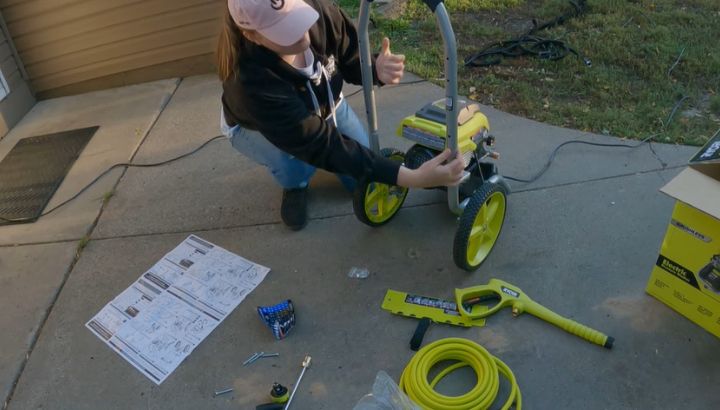
To use an electric pressure washer, connect it to a cold water supply, attach the correct nozzle for your surface, plug into a GFCI-protected outlet, squeeze the trigger to bleed air from the system, and clean with steady overlapping passes at the right standoff distance. Start with the widest-angle nozzle available and step down to higher-pressure tips only after confirming the surface tolerates increased force without visible damage. Never run the pump without water flowing through it, and always depressurize the wand by squeezing the trigger before disconnecting hose fittings or swapping nozzle tips.
Electric pressure washers have become the go-to cleaning tool for homeowners, auto detailers, and property managers who need real cleaning power without the noise, exhaust fumes, or heavy maintenance demands of gas-powered alternatives.
Yet a surprising number of people unbox one, struggle with low pressure, accidentally strip finish off a wood deck, or blow out a connection because no one properly explained the fundamentals.
The equipment follows a clear and learnable logic: water enters the pump at tap pressure, gets amplified through a motor-driven mechanism, exits through a wand and nozzle, and the nozzle angle determines whether the output gently rinses a car or aggressively blasts grease off a concrete pad.
This complete resource on how to use an electric pressure washer synthesizes everything from professional tutorials and operator manuals into one practical guide covering every step from unpacking to winter storage.
What Electric Pressure Washers Actually Do: Components and Performance Specs
Understanding the machine before turning it on is the foundation of getting consistent results. An electric pressure washer runs an electric motor that drives either a plunger pump or an axial cam pump.
Water enters under standard tap pressure, gets amplified many times over by the pump mechanism, and exits through the wand at dramatically higher velocity.
The two numbers that define real-world performance are PSI (pounds per square inch, measuring pressure) and GPM (gallons per minute, measuring flow rate). Multiply them together and you get cleaning units, a more accurate picture of how much work the machine performs per minute than either metric alone.
PSI, GPM, and Real-World Performance Requirements
Most consumer electric models operate between 1,300 and 2,300 PSI with flow rates between 1.2 and 2.0 GPM. For light residential tasks like rinsing outdoor furniture, washing vehicles, or cleaning siding, 1,500 PSI at 1.4 GPM handles everything with room to spare.
For concrete driveways, oil-stained patios, and heavy accumulated grime, the sweet spot is 1,800 to 2,200 PSI with at least 1.6 GPM. Beyond 2,300 PSI in electric units you typically enter commercial-grade territory.
Gas pressure washers start where most electric models top out, making gas units the choice for heavy stripping, large surface areas, and sustained commercial use, while electric models excel at anything residential where control and convenience matter more than raw output.
Key Components and How They Work Together
The inlet filter is a small mesh screen at the water entry port that keeps sediment and debris out of the pump. Always inspect it before each session.
The unloader valve is an internal pressure-relief mechanism that recirculates water back through the pump whenever you release the trigger gun, preventing dangerous pressure spikes when the spray path is closed.
Quick-connect fittings on the hose, wand, and nozzle ports make swapping components fast, but worn O-rings inside these fittings cause most of the leaks users encounter at connections. Most units also include a detergent tank or a downstream injection port for applying cleaning solution before the high-pressure rinse.
Safety Procedures That Cannot Be Skipped
Electric units produce far less noise and zero exhaust fumes compared to gas machines, but pressurized water is still powerful enough to lacerate skin, kick debris toward your face at damaging speed, and create slip hazards across every wet surface in the work area.
Treating the wand with the same respect you would give any powerful tool leads to better habits and prevents the kinds of accidents that end up in urgent care visits.
Personal Protective Equipment Every User Needs
Wear safety glasses or impact-rated goggles on every job without exception. High-pressure spray deflects off hard surfaces and returns grit and water at surprising velocity. Grip-soled, closed-toe footwear is non-negotiable because the perimeter around any pressure washing job becomes slippery within minutes.
Waterproof gloves are worthwhile when applying chemical degreasers or working extended sessions in cold weather. Avoid working from ladders when possible.
The recoil from the wand combined with an unstable platform is a legitimate fall hazard. Use extension wands and angle adapters to reach elevated surfaces from solid ground instead.
Electrical Safety and GFCI Outlet Requirements
Plug into a GFCI outlet every time. These outlets cut power instantly if moisture enters the circuit, which is essentially guaranteed during any outdoor cleaning session. Outdoor outlets installed after the late 1970s are typically GFCI-protected, but confirm before plugging in.
If using an extension cord, choose 12 or 14-gauge rated for outdoor use, no longer than 25 feet, and rated above the machine’s amperage draw (typically 12 to 15 amps).
Keep the power cord out of standing water and routed away from the spray path. If the GFCI trips repeatedly during use, stop immediately and inspect for internal moisture or cord damage before resuming.
How to Set Up and Start Your Pressure Washer
Rushing the setup phase is where the majority of beginner problems originate. Five minutes of careful preparation prevents the low-pressure symptoms, pump damage, and connection failures that frustrate users throughout an entire cleaning session.
Connecting the Water Supply Without Mistakes
Use a garden hose with a minimum 5/8-inch internal diameter. A kinked or undersized supply hose restricts flow below what the pump requires, causing pump cavitation, a condition where the pump starves for water and produces a rattling noise alongside erratic pressure output. Connect the supply hose to the machine’s water inlet and tighten by hand.
Check the inlet filter screen and rinse it free of any sediment before connecting. Turn the supply tap on fully before powering the machine on. Running the pressure washer pump dry even briefly can damage internal seals and lead to costly early failure.
Attaching the Hose, Wand, and Priming the System
Connect the high-pressure hose to the pump outlet and trigger gun using quick-connect couplers. Press the sleeve collar back, insert the male fitting, release the collar, and pull firmly to confirm the lock. Attach the wand to the gun the same way.
Before installing a nozzle, squeeze the trigger with water flowing to bleed air from the hose and pump interior. You will see a short burst of mixed air and water, followed by a steady clean stream.
Once the system flows consistently, install your chosen nozzle and begin. Never install a nozzle while the system is unpurged, as trapped air causes pulsating output on the first trigger pull.
Understanding the Color-Coded Nozzle System
The nozzle is the single most consequential piece of equipment on the machine. The spray angle concentrates or disperses the water stream and determines whether you are gently rinsing or aggressively stripping. Every standard set of tips uses an internationally recognized color code that makes selection straightforward once you understand what each angle does.
| Nozzle Color | Spray Angle | Primary Use Case | Risk to Surface |
|---|---|---|---|
| Red | 0 degrees | Stripping rust, removing stuck paint deposits | Very High |
| Yellow | 15 degrees | Heavy concrete stains, surface preparation work | High |
| Green | 25 degrees | Driveways, patios, brick, walkways | Moderate |
| White | 40 degrees | Siding, decks, vehicles, outdoor furniture | Low |
| Black | 65 degrees | Soap and detergent application only | Minimal |
The red 0-degree tip concentrates the entire water output into a pencil-thin stream capable of cutting wood fibers, etching sealed concrete, and causing serious injection injuries to skin. Most residential tasks never require it. The green 25-degree tip handles the majority of general outdoor cleaning jobs effectively. When uncertain, always start with the widest angle available and narrow down only if results prove insufficient after testing on an inconspicuous area first.
Turbo Nozzles and Surface Cleaner Attachments
A turbo nozzle, also called a rotary nozzle, spins the 0-degree stream in a circular pattern, combining the penetrating power of a narrow tip with broader surface coverage than a standard wand pass.
These work particularly well on heavily stained or textured concrete where the standard green tip falls short. A surface cleaner attachment is a shrouded disc with two rotating internal nozzles that produces even, streak-free results across large flat areas.
It cleans driveways and parking areas dramatically faster than wand-only technique and eliminates the banding pattern that directional wand passes leave on open concrete.
Proper Operating Technique: Step-by-Step
Learning how to use an electric pressure washer effectively comes down to three practical variables: nozzle selection, standoff distance, and wand movement speed. Getting all three right on every surface produces clean, undamaged results without guesswork.
Starting the Machine and Making First Contact
With water flowing, nozzle installed, and the trigger safety disengaged, power on the machine. Point the wand at a low-stakes test area such as the back of a fence panel or the far edge of a driveway and squeeze the trigger.
Hold the tip 18 to 24 inches from the surface for the first pass and evaluate the result. If cleaning is adequate at that distance, maintain it. If the surface needs more impact, step closer in 2-inch increments until you find the effective range.
If you see etching, raised wood fibers, or paint removal on the first pass, step back immediately and switch to a wider nozzle before continuing.
Wand Movement, Overlap, and Standoff Distance
Work in consistent overlapping passes with roughly 50 percent overlap between each stroke, similar to the pattern used when mowing grass. Move the wand at a pace where you can visibly watch dirt lifting and clearing in front of the spray.
Moving too fast leaves residue and streaking; moving too slowly concentrates energy in one spot and risks surface damage. Recommended standoff distances vary by surface type: 6 to 10 inches for bare concrete, 12 to 18 inches for sealed or painted hard surfaces, and 18 to 24 inches for wood, vinyl, vehicles, and boat surfaces.
Always work with the grain on wood and top-to-bottom on vertical surfaces to carry loosened material downward away from already-cleaned areas.
Applying and Rinsing Detergent Correctly
Switch to the black 65-degree tip or use the machine’s built-in downstream injection port for soap application. Apply detergent from the bottom of the surface upward to prevent runoff from streaking areas the soap has not yet reached. Allow 3 to 5 minutes of dwell time for the cleaner to break down surface grime, but do not let it dry on the material.
Switch to a wider rinse tip and work top-to-bottom to carry loosened material cleanly away. Products like Simple Green multi-purpose cleaner or dedicated car wash concentrates are compatible with standard pump seals and most exterior surfaces. Household dish soap and undiluted bleach can corrode pump seals and damage certain coatings over time.
Surface-Specific Cleaning Guidance
Concrete Driveways, Walkways, and Patios
Concrete is the most durable surface for pressure washing and can handle the more aggressive settings that electric units deliver. Pre-apply a degreaser to oil and grease stains and allow at least 5 to 10 minutes of penetration before rinsing. Use the green or yellow nozzle tip at 6 to 10 inches of distance for maximum effect on stubborn staining.
A surface cleaner attachment is highly recommended for large driveways because it eliminates the directional banding that wand passes leave on open concrete and cuts cleaning time significantly on expansive areas. Efflorescence, the white powdery mineral residue common on concrete and masonry, responds best to an acidic cleaner product applied before the pressure rinse.
Wood Decks, Fences, and Timber Structures
Wood requires more care than any other standard pressure washing target. Use the white 40-degree nozzle exclusively on all wood surfaces. Work parallel to the grain direction and never across it. Maintain at least 18 inches of standoff distance and keep the wand moving constantly without pausing at any single point.
Older, weathered decks will show grain raising after washing, which is expected and not a sign of damage. Allow the wood to dry completely for 48 to 72 hours before applying any stain, sealer, or protective coating.
Never use the yellow or red tip on any wood product, and avoid extended soap contact with pressure-treated lumber as certain chemical formulations can cause visible surface discoloration.
Vehicles, Boats, and Delicate Coated Surfaces
For vehicle washing, use the white 40-degree tip at 18 to 24 inches minimum standoff distance. Rinse from the roof downward to carry loose surface debris away from the paint before applying soap. Avoid directing the spray at window seals, door jambs, convertible soft-top material, or any exposed electrical connections.
A foam cannon attachment that threads directly into the trigger gun provides thick, clinging soap coverage that outperforms downstream soap injection for automotive surfaces and significantly reduces the chance of introducing swirl marks during the rinse cycle. For boats, exercise additional care around teak trim, painted fiberglass, and any hardware-mounted components exposed to direct spray.
Troubleshooting, Maintenance, and Storage
Why Pressure Drops and How to Fix It
Reduced output pressure following a period of normal operation almost always traces back to three causes: a clogged inlet filter, a worn or cracked nozzle tip, or a compromised pump seal. Pull and flush the inlet filter first.
Install a replacement nozzle tip to rule out tip wear as the cause. Check the supply hose for kinks and verify the tap is fully open. If all of these check out and pressure remains weak, the unloader valve may be stuck partially open, a fault that requires professional service to correct properly.
Visible water leaking from beneath the pump body during operation typically indicates a failed internal seal rather than an external fitting issue.
Pulsating or Surging Output
Pulsating pressure, where output alternates between strong and weak every second or two, almost always means air is entering the water supply side of the system. Causes include a loose inlet hose connection, a kinked supply hose, or a tap that cannot deliver adequate flow to match the pump’s demand.
Re-seat all inlet connections, ensure the supply tap is fully open, and squeeze the trigger to purge air from the system again. If the tap cannot supply flow at a rate greater than the machine’s stated GPM rating, consider adding a storage container between the tap and machine inlet to buffer and stabilize the water supply during operation.
Post-Use Maintenance and Winter Storage
After every use, flush plain water through the system for 30 to 60 seconds to clear any detergent residue from the pump and hose interior. Switch off, disconnect the supply hose, then squeeze the trigger to release residual pressure from the wand and line. Inspect O-ring seals at each connection point and replace any that appear cracked or deformed.
Thread-type leaks at the water inlet respond to fresh thread seal tape applied clockwise on the male threads before reconnecting. For winter storage, pump pump saver solution through the inlet until fluid exits the wand, confirming the pump housing interior is protected from freeze expansion.
Units equipped with a brushless motor tolerate temperature extremes better than brush-type alternatives and maintain performance over more storage cycles without carbon brush degradation.
| Factor | Electric Pressure Washer | Gas Pressure Washer |
|---|---|---|
| PSI Range | 1,300 to 2,300 | 2,000 to 4,000+ |
| GPM Range | 1.2 to 2.0 | 1.8 to 4.0 |
| Noise Level | 60 to 78 dB | 85 to 100 dB |
| Emissions | None | Fuel exhaust fumes |
| Maintenance Required | Minimal (seals, O-rings) | High (oil, plugs, carburetor) |
| Weight | 20 to 40 lbs | 50 to 80+ lbs |
| Best Suited For | Residential, vehicles, light jobs | Heavy commercial, large surfaces |
| Price Range | $100 to $450 | $300 to $1,000+ |
Frequently Asked Questions
How far should I hold the nozzle from the surface?
Begin at 18 to 24 inches from any new surface and adjust based on what you observe. Bare concrete tolerates 6 to 10 inches with a green or yellow tip. Wood, painted surfaces, and vehicles should stay at a minimum 18-inch standoff regardless of tip choice.
Vinyl siding and roof materials typically require 24 to 36 inches with the white 40-degree tip to avoid driving water under lapped panels or loosening fasteners.
Test an inconspicuous area before committing to a full cleaning pass. Finding the right standoff distance in the first 30 seconds of each new surface prevents the most common cause of accidental pressure washing damage and wasted time re-cleaning streaked areas.
Can I use hot water in an electric pressure washer?
Most consumer electric pressure washers are designed for cold water input only, with a maximum safe inlet temperature of around 104 degrees Fahrenheit. Exceeding that threshold damages pump seals, degrades O-ring materials, and voids most manufacturer warranties on the pump assembly.
Purpose-built hot-water pressure washers exist but are commercial-grade units priced well beyond the residential range. For grease, oil, and protein-based stains where hot water would normally be an advantage, apply a quality degreaser with adequate dwell time instead.
The chemical breakdown delivered by a good cleaning solution compensates effectively for the absence of heat, particularly when followed by a thorough high-pressure cold water rinse afterward.
Why does the machine keep tripping the circuit breaker?
A tripped breaker almost always indicates the circuit cannot sustain the machine’s amperage draw during operation. Most electric pressure washers require a dedicated 15-amp or 20-amp circuit, meaning no other appliances or devices should share that outlet during a cleaning session.
Using an extension cord that is too long or too light-gauge adds resistance that causes voltage drop and elevated current draw, which can also trigger the breaker even on a properly rated circuit. If the breaker trips with the machine alone on a dedicated circuit, the motor may be drawing excessive current due to internal wear or a developing fault. Have the unit inspected by a service technician before resuming use.
What detergents are safe to use with a pressure washer?
Always use cleaning products specifically formulated for pressure washer use. These are engineered to work correctly with downstream injection systems, produce appropriate foam at low pressure, rinse cleanly without leaving residue, and avoid attacking the rubber and synthetic seal materials inside the pump assembly.
Good categories include multi-purpose outdoor surface cleaners, dedicated car wash concentrates, wood and deck brighteners, and concrete degreasers. Avoid standard household dish soap, bleach solutions (unless explicitly rated by the manufacturer), and any abrasive compounds.
Never use undiluted concentrate expecting stronger results. It causes residue buildup and can etch or discolor sensitive surfaces regardless of the dilution instructions on the label.
Is pressure washing a roof safe?
Direct high-pressure washing of asphalt shingles is not recommended by most roofing professionals and should generally be avoided. High-pressure spray strips the protective granule coating from the shingle surface, accelerating UV degradation and reducing the shingle’s waterproofing performance over subsequent seasons.
The accepted professional approach for roof cleaning is soft washing: applying a low-pressure biocide solution that chemically kills algae, moss, and lichen, then allowing it to rinse naturally with rainfall rather than mechanically stripping growth with pressure.
If you must use a pressure washer on a roof surface at all, use only the black soap tip at maximum distance and allow the chemical solution to do the primary work rather than the water pressure.
How do I store the pressure washer through winter?
After the final use of the season, run clean water through the system for one full minute to flush any detergent residue from the pump and hose. Disconnect the supply hose and squeeze the trigger to release residual pressure from the wand and line.
With the machine powered off, pump a commercial pump saver solution through the inlet until the fluid exits from the wand, confirming the interior pump components are fully protected against freeze expansion damage.
Coil and store the high-pressure hose without sharp kinks that crack the inner braid. Lock the trigger safety on the gun and store the unit in a location that remains above freezing throughout the storage period.
Can I use an electric pressure washer to wash my car?
Yes, and electric models are better suited to automotive washing than gas units because the pressure range allows much finer control over delicate painted surfaces. Use the white 40-degree tip at 18 to 24 inches minimum standoff distance.
Rinse from the roof downward to carry loose debris away from the paint before applying soap. Apply car wash solution via the soap nozzle or a foam cannon attachment, allow 2 to 3 minutes of dwell time, then rinse systematically top-to-bottom.
A foam cannon produces thick, clinging soap coverage that outperforms standard downstream injection for vehicles and significantly reduces the surface contact friction during the rinse step. Avoid directing spray at door seals, convertible tops, and any electrical connections or sensors.
What is the trigger safety lock and why does it matter?
The trigger safety lock is a physical mechanism that prevents the trigger from being squeezed accidentally when the gun is set down, passed between users, or carried between working positions.
High-pressure water injected into skin causes injection injuries, which appear as small entry wounds on the surface but involve deep fluid infiltration beneath the skin requiring emergency surgical treatment. The habit of engaging the safety lock whenever the wand is not actively pointed at a target surface costs one second and eliminates that risk entirely.
It also prevents accidental activation that could knock objects over, shatter glass, or redirect the spray toward people, animals, or nearby sensitive property without warning.
How long can an electric pressure washer run continuously?
Consumer electric models are generally rated for duty cycles ranging from 30 minutes to several hours of continuous operation, depending on motor design and the quality of thermal management built into the unit.
Units with a brushless motor run significantly cooler and are designed for longer continuous use than brush-type motor models of comparable wattage. Monitor for signs of thermal stress during extended sessions: a strained motor sound, unusually warm water exiting the wand, or frequent activation of the thermal relief valve.
When these appear, pause for 5 to 10 minutes to let the pump and motor cool before continuing. Working in shorter bursts with brief rest intervals extends the service life of both the motor windings and the internal pump seal materials over many seasons of use.
Conclusion
Electric pressure washers deliver genuine cleaning power for a wide range of residential and light commercial applications when the operator matches technique and settings to each surface correctly.
The principles that determine every outcome remain consistent regardless of the job: select the right nozzle angle, maintain the appropriate standoff distance, let detergents handle the chemical breakdown before rinsing, and never run the pump without a full water supply flowing through the system.
Grasping how PSI, GPM, and nozzle geometry interact removes the guesswork and puts you in full control of the result on every surface you approach throughout the entire cleaning session.
For anyone learning how to use an electric pressure washer for the first time, the right starting point is always the widest nozzle at the greatest practical distance, then adjusting from there based on what you observe.
The instinct to assume more pressure automatically produces better results is understandable but often counterproductive, particularly on wood, painted surfaces, vehicles, and vinyl materials where the white 40-degree tip at controlled distance outperforms aggressive settings by a wide margin. The best results come from the right combination of pressure, flow, dwell time, and consistent wand technique rather than from maximizing any single variable.
Keep the inlet filter clean before each session, replace O-ring seals at the first sign of weeping connections, winterize the pump properly before any period of freezing temperatures, and this equipment will perform reliably for many years. The gap between a frustrating experience and a genuinely satisfying clean almost always traces back to decisions made in the first two minutes of setup: correct nozzle, right distance, appropriate cleaning solution, and steady controlled technique maintained consistently from start to finish.