
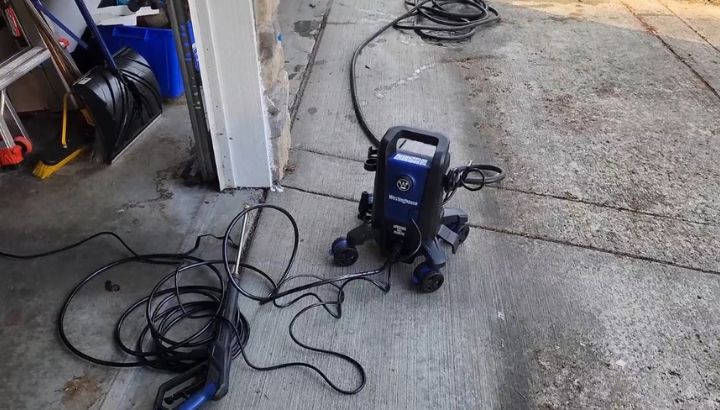
Most electric pressure washers last 3 to 5 years under regular residential use with basic maintenance. Premium models with brushless motors and brass pump fittings can deliver 7 to 10 years of reliable service. Motor type, pump material, and duty cycle management are the three factors that determine lifespan most directly. Dry running and skipped winterization are the two habits that end machine life fastest regardless of build quality.
Buying a pressure washer is a meaningful investment, and knowing how long it will actually perform before needing replacement helps you choose the right model and maintain it correctly. Most homeowners get far less service life from their machines than the equipment is capable of delivering, simply because key maintenance steps get skipped. This guide answers how long does an electric pressure washer last with real data, covers every factor that determines service life, and gives you the specific habits that extend reliable performance significantly.
What Determines How Long an Electric Pressure Washer Lasts
Two engineering decisions made during manufacturing set the service ceiling more than anything else: motor design and pump material. Every other factor either extends or compresses the lifespan those two components create.
A machine built with a brushless motor and a brass pump body starts life with a far higher service ceiling than a unit built with a brushed motor and a plastic pump housing. The premium components cost more upfront but justify that cost across many additional operating seasons.
Understanding what your specific machine is built from is the starting point for setting realistic lifespan expectations and planning the maintenance approach that suits your actual usage pattern.
Motor Type and Its Direct Impact on Service Life
Brushed motors use carbon brushes that press against a rotating commutator to transfer current to the motor windings. Those brushes wear down with every operating hour and eventually require replacement or cause motor failure through carbon debris contamination of internal winding surfaces.
A brushless motor eliminates the brush and commutator entirely. Electronic controllers handle current switching, which removes the primary mechanical wear point from the motor assembly. Brushless motors run cooler, draw current more efficiently, and deliver significantly more operating hours before any failure mode appears.
Consumer brushed motor models typically deliver 200 to 400 operating hours before significant motor wear becomes apparent. Brushless models in the same power tier routinely exceed 500 operating hours with proper maintenance, and premium brushless units from established brands target 800 to 1,000 hours of total service.
Pump Material: Plastic, Aluminum, and Brass Compared
The pump body material determines how well the machine tolerates the heat, pressure cycling, and chemical exposure it experiences during every operating session. Plastic pump housings are the most common on budget models and the first component to show wear under sustained use conditions.
Aluminum pump bodies offer better heat dissipation and corrosion resistance than plastic but remain susceptible to pitting from prolonged exposure to hard water mineral deposits and aggressive cleaning chemicals. They represent a reliable middle tier suitable for regular residential use.
Brass pump fittings and solid brass pump bodies are the durability gold standard. Brass resists corrosion, tolerates thermal cycling, and maintains dimensional stability across thousands of pressure cycles. Machines built with brass pump components consistently outlast aluminum and plastic alternatives by significant margins across comparative service life data.
Average Lifespan by Machine Category and Price Tier
Service life varies substantially across the three broad categories of consumer electric pressure washers. Knowing where your machine sits in this hierarchy sets realistic expectations and guides the repair versus replace decision when problems eventually arise.
Budget Entry-Level Models Under $150
Entry-level machines use brushed motors with plastic pump housings and basic seal materials. Under normal residential use, these units deliver reliable performance for 2 to 4 years before pump seal degradation, motor wear, or housing fatigue causes performance loss.
With meticulous maintenance including post-use flushing, proper winterization, and careful duty cycle management, some entry-level machines exceed expectations and reach 5 years of service. However, this requires more consistent attention than most homeowners apply.
When an entry-level machine fails, repair cost often approaches or exceeds the replacement cost for a comparable unit. Evaluate repair economics carefully before investing in parts for a machine in this price tier.
Mid-Range Consumer Models Between $150 and $350
Mid-range machines represent the best value tier for most homeowners. They combine aluminum or mixed-material pump housings with improved seal quality, better thermal management, and in many cases a brushless motor option that extends the service ceiling meaningfully.
Typical service life in this tier runs 4 to 6 years under regular residential use. Brands including Sun Joe, Greenworks, and Ryobi build their core residential lineup in this category with parts availability that makes seal replacement and minor repairs economically sensible.
Premium and Semi-Professional Models Above $350
Premium consumer and light commercial models use full brass pump assemblies, brushless motor configurations, and heavy-duty seal materials rated for sustained high-pressure operation. These machines are engineered for operating hours rather than calendar years.
Models from Karcher and Simpson target 500 to 1,000 hours of operating time before major service is required. Under typical residential use of 50 to 100 hours per year, that translates to 7 to 10 years of reliable service with proper maintenance applied throughout.
The premium price reflects engineering designed for sustained commercial duty cycles. For homeowners who intend to keep a machine for a decade, this tier delivers the lowest cost per operating hour across the full ownership period.
The Duty Cycle Factor Most Users Completely Ignore
The single most underappreciated variable in how long does an electric pressure washer last is the duty cycle specification published in the machine’s documentation. Most users never check it and inadvertently run their machines in ways that accelerate wear dramatically.
What Duty Cycle Actually Means in Practice
Duty cycle is the percentage of a given time period during which the machine can safely operate under full load without thermal damage. A 50 percent duty cycle means the machine should rest for one minute for every minute of active operation.
Consumer electric models typically carry duty cycles between 30 and 70 percent. Entry-level machines with plastic housings and brushed motors sit at the lower end of that range. Premium models with brushless motors and brass pump components approach or exceed 70 percent on their rated cycle specifications.
Exceeding the rated duty cycle does not immediately destroy a machine. It gradually degrades motor winding insulation, accelerates pump seal hardening, and builds cumulative heat stress that shortens the lifespan of every temperature-sensitive component inside the unit.
How Ignoring Duty Cycle Shortens Machine Life
The most common scenario is a homeowner attempting to clean an entire driveway, fence, deck, and patio in a single continuous session. This places the machine under continuous load for 60 to 90 minutes or more, far exceeding the duty cycle rating of most consumer models.
The thermal effects compound with each session that exceeds the rated cycle. Motor windings lose insulation integrity incrementally with each overtemperature event. The thermal overload protector trips more frequently, and each trip introduces additional thermal stress at the recovery point.
Plan cleaning sessions in segments that respect the duty cycle specification. A machine rated at 50 percent needs planned rest intervals built into the work schedule, not continuous operation until the thermal protection trips automatically.
Maintenance Habits That Directly Extend Service Life
The gap between a machine that lasts 3 years and one that lasts 8 years in the same product tier is almost always maintenance discipline rather than build quality difference. Consistent application of a short post-use routine delivers the most significant lifespan extension of any single factor.
Post-Use Routine That Takes Under Three Minutes
After every session, flush the pump with clean water for 30 to 60 seconds to clear any detergent residue from internal passages. Switch off, unplug, disconnect the supply hose, and squeeze the trigger to release residual pressure from the wand and hose interior.
Inspect all O-ring seals at quick-connect connection points and replace any that show cracking, flattening, or deformation. Worn O-rings cause pressurized connection failures that lead users to incorrectly diagnose pump problems when the actual fault is an accessible and inexpensive seal.
Coil the high-pressure hose without sharp kinks and store nozzle tips in the included holder or a labeled bag. Organizing components takes 30 seconds and prevents the scenario where the correct nozzle is missing at the start of the next session.
Seasonal Maintenance That Protects the Pump Long-Term
At the start of each season, inspect the inlet filter mesh screen at the water inlet port. Mineral deposits and sediment accumulate on this screen across storage periods, and a clogged filter restricts flow below the pump’s demand threshold, causing cavitation that accelerates pump seal wear.
Apply pump saver solution at the end of every season before cold storage. Pump saver fills the internal passages with antifreeze and lubricating compound that prevents freeze expansion damage and keeps pump seals pliable throughout the dormant storage period.
Inspect the power cord, quick-connect couplers, and trigger gun mechanism annually. Replace any component showing corrosion, cracking, or mechanical looseness before it progresses to a failure that takes the entire machine offline during an active cleaning session.
Three Habits That Shorten Electric Pressure Washer Life Fastest
Understanding what kills pressure washers prematurely is as important as knowing what keeps them running. Three specific habits account for the majority of premature failures across every machine tier and brand.
Dry Running Without an Adequate Water Supply
Running the pump without water flowing through it is the fastest way to destroy a pressure washer pump regardless of build quality or price tier. Without water flowing through the pump, internal temperature rises rapidly and pump seals begin degrading within seconds of startup.
The unloader valve cannot function correctly without water to recirculate when the trigger is released. Dry running creates metal-to-metal contact inside the pump that scores valve seats and damages plunger surfaces permanently.
Always confirm the water supply is fully open and flowing before powering on the machine. Prime the pump by squeezing the trigger while the machine is unplugged until a steady, air-free stream flows from the wand before connecting power.
Skipping Winterization in Cold Storage Climates
Residual water inside the pump housing freezes during cold storage and expands with enough force to crack the pump body, split valve seats, and destroy seal materials that cannot be individually replaced on most consumer models.
A single freeze cycle on an unprotected pump can convert a fully functional machine into a non-repairable unit overnight. The damage is not always externally visible and only reveals itself on the first spring startup when output pressure is absent or drastically reduced.
Apply pump saver at the end of every season in any climate where storage temperatures drop below 40 degrees Fahrenheit at any point during the dormant period. Ten minutes of seasonal protection prevents the most costly single failure mode in electric pressure washer ownership.
Using Undersized or Damaged Extension Cords
An undersized extension cord creates voltage drop under load that forces the motor to draw higher current to maintain rated output. Higher current draw generates additional heat in the motor windings, accelerating insulation degradation with every operating session.
A 16-gauge indoor cord used on a machine that requires a 12 or 14-gauge outdoor-rated cord is not a short-term inconvenience. It is a consistent source of thermal stress that systematically shortens motor winding life across every session it is used.
Use only 12 or 14-gauge outdoor-rated cords no longer than 25 feet. If a longer run is required, step up to a heavier gauge to maintain adequate voltage delivery at the machine’s input terminals under full operating load.
Signs Your Machine Is Approaching End of Service Life
Recognizing the symptoms of a machine entering its final service period allows informed decisions about repair investment versus replacement timing before a complete failure forces the decision under pressure.
Performance Symptoms That Signal Significant Wear
Gradual reduction in output pressure that cannot be restored by cleaning the inlet filter or replacing the nozzle tip indicates pump seal wear. Seals that have hardened from age and thermal cycling cannot maintain the compression needed to build rated pressure across the pump chamber.
Pulsating pressure output that persists after priming indicates valve wear inside the pump. Intake and discharge valves that no longer seat cleanly allow backflow between pressure cycles, producing the characteristic rhythmic pulsing that worsens progressively as internal wear advances.
Frequent thermal overload trips during sessions that previously caused no thermal issues indicate motor winding insulation has degraded to the point where the motor draws excess current under normal load. This symptom typically precedes complete motor failure by one to several operating seasons.
Repair Versus Replace: A Practical Decision Table
| Decision Factor | Repair Makes Sense | Replace Makes Sense |
|---|---|---|
| Machine age | Under 4 years | Over 6 years |
| Original purchase price | Over $250 | Under $150 |
| Repair cost vs machine value | Under 40 percent | Over 60 percent |
| Parts availability | Available from manufacturer | Discontinued or unavailable |
| Motor condition | Functional, seals only failed | Motor winding failure confirmed |
| Pump material | Brass or aluminum body | Plastic pump housing |
| Maintenance history | Consistently maintained | Neglected throughout ownership |
The practical rule for most residential machines is straightforward. If repair cost exceeds 50 percent of the replacement cost for a comparable new model, replacement delivers better long-term value. If the machine is within warranty or has brass pump components worth preserving, targeted repair is worth pursuing first.
Brand Comparison for Long-Term Reliability and Lifespan
| Brand | Typical Lifespan | Motor Type | Pump Material | Parts Availability | Warranty |
|---|---|---|---|---|---|
| Karcher | 6 to 10 years | Brushless in premium range | Brass in upper tier | Excellent | 2 years |
| Sun Joe | 3 to 6 years | Brushed standard | Aluminum typical | Good | 2 years |
| Ryobi | 4 to 7 years | Brushless available | Aluminum to brass | Good | 3 years |
| Greenworks | 4 to 8 years | Brushless in pro range | Aluminum to brass | Good | 4 years |
| Simpson | 7 to 12 years | Brushless standard | Brass standard | Excellent | 5 years |
| Budget unbranded | 1 to 3 years | Brushed only | Plastic typical | Poor | 90 days or less |
Greenworks leads the consumer tier in warranty coverage at 4 years, reflecting genuine engineering confidence in their mid-range and professional lineup. Simpson targets the semi-professional market with brass pump assemblies and brushless motors as standard components rather than premium upgrades.
A Karcher premium model at $350 that delivers 8 years of reliable service costs approximately $44 per year of ownership. A budget unit at $120 lasting 2 years costs $60 per year before the replacement purchase that follows. Total ownership cost across a 10-year period almost always favors the premium machine when parts, repairs, and replacement frequency are included.
Why Is My Electric Pressure Washer Not Turning On?
How To Use An Electric Pressure Washer
Frequently Asked Questions
How long does an electric pressure washer last on average?
Most consumer electric pressure washers deliver 3 to 5 years of reliable service under typical residential use with basic maintenance applied consistently. Budget models at the entry level may fall short of 3 years under heavy use or with frequent maintenance gaps.
Premium models with brushless motors and brass pump components regularly exceed 7 years when maintenance is consistent and duty cycle limits are respected throughout ownership.
Operating hours matter more than calendar years for accurate lifespan assessment. A machine used 20 hours per year ages very differently from one used 100 hours per year, even if both share the same model and purchase date.
What is the most common reason electric pressure washers fail early?
Dry running is the single most destructive failure mode across all machine tiers and brands. Operating the pump without water flowing through it for even a brief period generates heat that hardens pump seals and scores valve surfaces beyond recovery within minutes.
Skipping winterization is the second most common cause of premature failure. Residual water left inside the pump during cold storage expands during freezing and permanently damages components that cannot be individually replaced on most consumer machines.
Both failures are completely preventable with simple habits that take under a minute each to perform correctly before and after every use of the machine.
Does a brushless motor really make a significant lifespan difference?
Yes. The difference is substantial and measurable rather than marginal. Brushed motors contain carbon brushes that wear down with every operating hour. As brushes wear, carbon debris contaminates motor windings and the commutator surface, causing resistance loss and eventual motor failure.
A brushless motor has no brushes, no commutator, and no carbon debris accumulation. The primary mechanical wear point is eliminated entirely. Brushless motors also run cooler under equivalent load, which reduces thermal stress on winding insulation across every operating session over the machine’s life.
In the same machine tier, a brushless motor model typically delivers 50 to 100 percent more operating hours than a brushed equivalent before any motor service is required.
Can I extend the life of a cheap pressure washer with better maintenance?
Yes, but within limits defined by the components the machine was built with. Consistent maintenance can extend the service life of a budget machine by 1 to 2 additional years compared to a neglected machine of identical specification and usage pattern.
However, maintenance cannot overcome the fundamental limitations of a plastic pump housing, low-grade seal materials, or a brushed motor designed for light intermittent duty. A well-maintained budget machine still has a lower service ceiling than a properly maintained premium model.
Maintenance extends whatever ceiling the machine’s components define. It does not raise that ceiling beyond the engineering constraints of the components the manufacturer chose to install.
How many operating hours does an electric pressure washer typically deliver?
Budget consumer models typically deliver 200 to 300 operating hours before significant pump or motor wear becomes apparent. Mid-range models with aluminum pump bodies and brushed motors generally reach 300 to 500 operating hours under normal conditions.
Premium models with brushless motors and brass pump components target 500 to 1,000 hours of total service life before major component service becomes necessary.
These figures assume the machine is operated within its rated duty cycle, never run dry, properly winterized each season, and maintained with post-use flushing and connection seal inspection before and after every storage period.
When should I repair my pressure washer instead of replacing it?
Repair makes economic sense when the machine is under 4 years old, the repair cost is below 40 to 50 percent of the replacement cost for a comparable unit, and parts are available directly from the manufacturer or a reliable third-party supplier.
Pump seal replacement is the most common and most cost-effective repair on mid-range machines with brass or aluminum pump bodies. Seal kits typically cost $15 to $40 and restore pressure performance on machines where the pump body itself remains structurally intact and undamaged.
Motor winding failure on a machine over 5 years old with a plastic pump housing is rarely worth repairing. Motor replacement cost typically approaches or exceeds the machine’s remaining useful value.
Does water supply quality affect how long a pressure washer lasts?
Hard water mineral content accelerates wear on pump seal materials and deposits scale on internal pump surfaces over time. Calcium and magnesium compounds in hard water gradually reduce seal flexibility, narrow internal passages, and can cause valve seats to stick partially open under operational pressure.
Running the machine through a basic garden hose sediment filter reduces mineral and particle intake to the pump, extending seal life measurably in hard water service areas. Always confirm the inlet filter mesh screen is clean before each session.
Soft or filtered water supply is a genuine longevity advantage that costs very little to arrange with a basic inline filter attachment available at most hardware retailers.
How do I know if my pressure washer pump is worn out?
The primary symptom of a worn pump is gradual pressure loss that cannot be restored by cleaning the inlet filter, replacing the nozzle tip, or improving the water supply. Worn pump seals allow internal bypass that reduces output pressure below rated specification regardless of external conditions.
Secondary symptoms include water leaking from beneath the pump body housing during operation, indicating internal seal failure beyond the accessible O-ring connection points. Pulsating pressure that persists after full priming indicates worn check valves inside the pump that no longer seat cleanly.
A pump producing less than 70 percent of rated pressure after all external checks confirm normal conditions has typically reached end of serviceable seal life.
Can leaving a pressure washer stored outside shorten its lifespan?
Outdoor storage without a waterproof cover accelerates corrosion on metal fittings, degrades rubber O-ring materials through repeated wet-dry UV exposure cycles, and gradually introduces moisture to motor housing internals through vent openings during rain events and morning condensation.
Over a 5-year ownership period, an outdoor-stored machine without a cover experiences meaningfully more seal degradation, fitting corrosion, and motor housing moisture infiltration than an equivalent machine stored in a covered dry location.
Use a purpose-made waterproof machine cover and position the machine under a roof or covered area between sessions. This single storage habit can add 1 to 2 years of reliable service to any machine regardless of quality tier.
Conclusion
Electric pressure washers last anywhere from 2 years on neglected budget machines to over a decade on well-maintained premium models with brushless motors and brass pump components. The variables that matter most are motor type, pump material, duty cycle discipline, consistent winterization, and post-use flushing after every session.
Addressing all five of these factors transforms average service life from the low end of the range to the high end, regardless of the machine tier you purchased.
If you want to know how long does an electric pressure washer last on your specific model, start by confirming the motor type and pump material, then build your maintenance habits around those two components. Premium materials combined with consistent care is the only combination that reliably delivers 7 to 10 years of trouble-free residential service.