
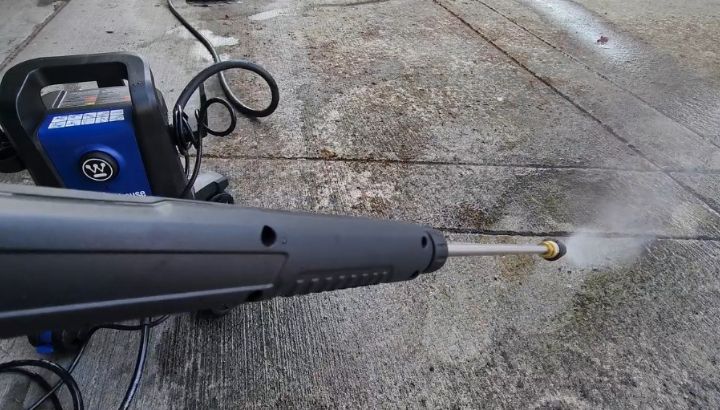
Electric pressure washers tolerate operational splash but not rain exposure, motor moisture, or standing water contact. The IP rating on your machine defines how much water exposure is safe. Most consumer models are rated IPX4 or IPX5, covering splash but not sustained rainfall. Always use a GFCI outlet and never operate during heavy rain or thunderstorms.
Water and electricity share the same workspace every time you run a pressure washer outdoors. Understanding where safe water exposure ends and genuine electrical hazard begins separates responsible operation from a preventable accident. The answer depends on your machine’s IP rating, rain intensity, power connection protection, and whether standing water is present. This guide covers every factor that determines whether wet-condition operation is safe, what happens when moisture reaches internal components, how to protect the machine and yourself, and what to do if the unit gets unexpectedly soaked.
What Getting Wet Actually Means for an Electric Pressure Washer
Not all water contact carries equal risk when it comes to electric pressure washers. The machine handles water flowing through its pump and hose system as its core function, but the motor housing and electrical components operate under entirely different rules.
The pump assembly carries pressurized water through sealed internal passages every operating cycle without fault. The motor, wiring, and power connection points are not designed for direct water contact and carry specific tolerance limits defined by the IP rating.
Understanding this distinction prevents the most dangerous assumption beginners make: that because the machine sprays water, every component must be waterproof. No consumer electric pressure washer is built that way, and manufacturers are explicit about this separation in their product documentation.
Three Categories of Water Exposure That Define Risk Level
Operational splash is water deflecting off cleaned surfaces and contacting the machine housing incidentally during a normal session. This is expected, accounted for in the IP rating, and not a safety concern on any properly certified machine.
Environmental rain exposure is rainfall contacting the machine during active outdoor use or outdoor storage between sessions. Whether this is safe depends entirely on rain intensity, the machine’s IP rating, and whether power connection points are protected.
Submersion or pooling contact is the highest-risk scenario, where the machine base sits in standing water or is partially submerged. No consumer electric pressure washer tolerates this condition, and it creates an immediate ground fault risk regardless of IP rating.
Why the Motor Housing Is the Critical Vulnerability
The pump is sealed and water-tolerant by design. It carries water under high pressure every operating cycle without issue. The vulnerability sits entirely in the motor housing, winding insulation, and power cord connections surrounding it.
Motor housing vents allow airflow for cooling during operation. Those same vents allow water entry when rain falls at the angle the vents face, or when the machine tips and directs vents toward pooling ground water.
Once moisture enters the motor housing, it bridges insulation gaps between electrical components. The result is either an immediate GFCI fault trip, or gradual corrosion that degrades winding insulation over days until a fault develops under operational load.
IP Ratings: The Specification That Directly Answers the Question
The IP rating is the single most important number for determining how much water exposure a pressure washer can safely tolerate. It follows the IEC 60529 international classification standard and appears on the product label or specification sheet.
IP stands for Ingress Protection. The rating uses two digits. The first covers solid particle resistance. The second covers liquid ingress resistance, and that second digit determines every wet-condition operation decision.
Breaking Down the Water Resistance Scale in Practical Terms
A second digit of 0 means zero liquid protection. A digit of 1 means protection against vertically dripping water only. Neither rating is appropriate for any outdoor pressure washer application.
IPX4 certifies protection against water splashing from any direction for at least 10 minutes without harmful effect on internal electrical components. This is the minimum acceptable rating for outdoor equipment used near water.
IPX5 certifies protection against low-pressure water jets from any direction. IPX6 certifies protection against high-pressure water jets. IPX4 is the floor for outdoor use, and IPX5 provides meaningfully greater confidence in variable weather conditions.
IP Rating Comparison Across Common Consumer Brands
| Brand and Model | IP Rating | Safe in Light Drizzle | Safe in Heavy Rain | Outdoor Storage Safe |
|---|---|---|---|---|
| Karcher K series | IPX5 | Yes, with precautions | No | Covered storage only |
| Sun Joe SPX3000 | IPX4 | Yes, with precautions | No | Covered storage only |
| Ryobi RY142300 | IPX4 | Yes, with precautions | No | Covered storage only |
| Greenworks 2000 PSI | IPX4 | Yes, with precautions | No | Covered storage only |
| Worx Hydroshot | IPX5 | Yes, with precautions | No | Covered storage only |
| Unrated budget models | None certified | No | No | Indoor storage only |
Machines without a published IP rating should be treated as having zero water resistance certification. Operating them in any rain condition means working entirely outside the manufacturer’s tested and approved parameters.
Electrical Hazards That Make Water Exposure Genuinely Dangerous
The reason whether can an electric pressure washer get wet requires a careful, condition-specific answer is the severity of what happens when water reaches the wrong components. These are not minor equipment concerns. They are life-safety hazards.
Ground Fault: The Primary Danger Mechanism
A ground fault occurs when electrical current finds an unintended path to ground outside the designed circuit. In dry conditions, current flows from the outlet through the motor windings and back to the source in a controlled loop.
Water bridging insulation between a live conductor and the machine housing breaks that controlled loop. If you are standing on wet ground and touching the machine housing when this occurs, your body completes the circuit.
A GFCI outlet interrupts this fault within 25 milliseconds at a current threshold as low as 5 milliamps. At that response speed, the device trips before current reaches the threshold that causes cardiac disruption in most healthy adults.
How Moisture Reaches Internal Electrical Components
Direct rain falling into motor housing vents is the most common path for water to reach windings during active operation. Vents are essential for motor cooling but create an opening that allows water entry when rain falls at the specific angle the vents face.
Capillary action along the power cord is a secondary but equally real path. Water contacting the cord near the machine runs along the outer insulation jacket toward the plug end and enters the socket face if the connection is uncovered.
Physical tipping or knockover of the machine during operation is the third path. Even a few seconds with motor housing vents submerged in pooling ground water introduces sufficient moisture to create a fault condition in the winding area.
What Happens to Motor Windings When Wet
Motor windings are copper coils wrapped in thin insulating varnish. This varnish maintains electrical separation between individual winding loops and between the windings and the motor casing.
Water contact either bridges adjacent insulation gaps immediately or begins corrosion that degrades varnish integrity over days and weeks. A motor powered on while wet is at maximum risk of immediate winding failure.
A motor allowed to dry completely for 48 hours before restart has a significantly better recovery outcome. Moisture evaporates from winding surfaces before power is applied, and in many cases the motor operates normally if water exposure was brief.
Operating Conditions: Safe, Marginal, and Unacceptable
Defining when wet-condition operation is acceptable requires applying IP rating knowledge to specific real-world scenarios with appropriate precautions in place. The conditions fall clearly into three distinct categories.
Light Drizzle With Full Precautions Active
Light drizzle on a machine rated IPX4 or higher, with a GFCI outlet, weatherproof outlet cover, and the power cord elevated off the ground, represents a manageable risk level for most experienced users.
Position the machine with motor housing vents facing away from the direction of rainfall whenever layout permits. Most consumer machines vent from the rear or sides, meaning facing the unit toward the work surface naturally directs vents away from overhead rain.
Keep sessions short in drizzle conditions and inspect connection points between passes for water accumulation near vent openings or pooling beneath the machine base.
Conditions That Require Stopping Work Immediately
Heavy rain creating active pooling on the ground around the machine requires an immediate stop regardless of IP rating or precautions in place. No consumer IP certification covers sustained heavy rainfall combined with base contact with standing water.
Any sound of thunder or sight of lightning requires stopping and moving indoors without delay. Lightning ground strikes send current through the earth and up through any conductive path in the area, including the pressure washer power cord and the wet ground under your feet.
A GFCI trip during wet-condition operation is not a nuisance event to reset and continue through. It confirms a real active fault. Reset once, observe whether it trips again immediately, and stop completely if it does.
Protective Measures That Reduce Wet-Condition Risk
Specific protective steps taken before operating in wet conditions reduce primary hazard points to levels that experienced operators consider acceptable in light rain scenarios. None eliminate risk entirely, but together they address every known fault entry point.
Electrical Protection at the Outlet and Along the Cord
Install a weatherproof in-use outlet cover that seals around the cord while connected. These covers have a hinged housing that closes around the cord rather than leaving the outlet face exposed to rain. They cost under $15 at any hardware retailer.
Route the power cord to create a drip loop below the outlet connection point. Water running along the cord reaches the lowest point of the loop and drips off before reaching the socket face.
Confirm GFCI protection before every wet-weather session by pressing the test button, verifying power loss, then pressing reset and verifying restoration. A GFCI that does not hold its reset must be replaced before any outdoor use.
Physical Protection Summary for Wet-Weather Operation
| Protective Measure | Hazard Addressed | Approximate Cost | Difficulty |
|---|---|---|---|
| Weatherproof outlet cover | Water entry at power connection | Under $15 | Easy |
| Pop-up canopy over machine | Direct overhead rainfall on housing | $30 to $80 | Easy |
| Rubber mat under machine | Ground contact with standing water | $15 to $30 | Easy |
| Drip loop in cord routing | Capillary water travel toward outlet | Zero cost | Easy |
| Rubber-soled waterproof boots | Ground fault path through operator body | $30 to $80 | Easy |
| GFCI outlet or portable adapter | Ground fault circuit interruption | $15 to $40 | Easy |
A pop-up canopy over the machine addresses overhead rain exposure directly. Select fiberglass or plastic poles rather than aluminum framing to avoid placing a conductive metal structure near electrical equipment in storm-adjacent conditions.
Personal Protection That Interrupts the Ground Fault Path
Rubber-soled waterproof boots are the most critical personal protection item for wet-condition operation. Rubber soles interrupt the conductive path between a ground fault at the machine and current flow through your body to the wet ground surface.
Waterproof gloves add a secondary barrier at the hand-to-machine contact point. They work best as supplemental protection rather than primary protection, and they provide practical grip and temperature comfort benefits regardless of electrical risk level.
Safety glasses remain mandatory in wet operating conditions without exception. Rain combined with high-pressure spray creates a denser projectile environment than dry-weather operation, and moisture increases debris carry toward eye level during cleaning passes.
What to Do When the Machine Gets Soaked Unexpectedly
Despite careful precautions, unexpected rain or accidental knockover into pooling water sometimes occurs. The response in the first minutes after unexpected soaking directly determines whether the machine recovers fully or sustains permanent damage.
Immediate Response Steps After Unexpected Soaking
Switch the machine off and disconnect the power cord from the outlet immediately. Do not attempt to assess damage or test any function while the machine remains connected to power.
Move the machine to a dry, covered, ventilated area without delay. Do not place it in an enclosed space without airflow, as moisture needs active evaporation rather than redistributing to other internal surfaces.
Position the machine with motor housing vents facing downward or sideways to encourage internally pooled water to drain by gravity rather than remaining in contact with windings and electrical contacts.
Drying Protocol Before Any Restart Attempt
Allow a minimum of 48 hours of drying time in a warm, ventilated space before any restart attempt. This window allows moisture to evaporate from winding surfaces, seal cavities, and motor housing interiors where airflow is naturally limited.
For machines that experienced significant soaking or sat in standing water, 72 hours is the more appropriate drying window. Directing a fan at the motor housing vents during this period accelerates evaporation in internal spaces where passive airflow is slowest.
Do not use a heat gun, hair dryer at close range, or any direct concentrated heat source to accelerate drying. Concentrated heat damages winding insulation varnish at temperatures above 130 degrees Fahrenheit.
Post-Drying Inspection Before First Restart
After the full drying period, inspect the power cord for cracking, discoloration, or deformation of the outer insulation jacket. Water remaining in contact with cord insulation during drying can cause gradual softening of the PVC jacket that is not immediately visible.
Inspect all O-ring seals at every quick-connect fitting and the water inlet for signs of swelling or deformation. Swollen O-rings do not seat correctly and create pressure leaks on the first operational use after restart.
Test the outlet with a separate device before connecting the pressure washer. Confirm GFCI function using the test and reset buttons. Connect the machine, power on, and observe operation for the first 60 seconds before committing to a full session.
Frequently Asked Questions
Can an electric pressure washer get wet during normal outdoor use?
Yes. Electric pressure washers are specifically designed to tolerate operational water exposure during normal use, including spray deflecting back from cleaned surfaces and incidental splash during hose connection and disconnection. This is what the IP rating certifies.
The machine is not designed to tolerate direct submersion, sustained heavy rainfall, or moisture entering the motor housing through vent openings.
Confirm the machine carries a minimum IPX4 rating, keep power connections protected with a weatherproof cover, and operate on an elevated non-conductive surface. Within those parameters, operational water contact during normal use is expected, accounted for, and safe.
What happens if water gets inside the motor of a pressure washer?
Water inside the motor housing bridges insulation gaps between copper winding loops, creating unintended current paths. This either causes an immediate GFCI fault trip or begins a corrosion process that degrades winding insulation over days until a fault develops.
A motor powered on while wet is at highest risk of immediate winding failure. A motor allowed to dry completely for 48 to 72 hours has a reasonable recovery chance if water exposure was brief.
If any burning smell accompanies the first restart after drying, the motor windings are permanently damaged and the unit requires professional service or full replacement.
Is it safe to leave an electric pressure washer outside in the rain without a cover?
No. Leaving a machine outdoors in rain without a waterproof cover creates cumulative moisture infiltration across every rain event. Even a machine rated IPX5 is not certified for sustained outdoor storage exposure to repeated wet-dry cycles.
Cover the machine with a purpose-made waterproof cover and position it under a covered area such as a garage, covered patio, or roof overhang whenever possible.
At minimum, store the machine with all hoses disconnected, all connection ports covered, and the trigger safety fully engaged before any outdoor storage period that includes rain exposure.
How do I know if my pressure washer has been damaged by water exposure?
Visible signs include corrosion on metal connection fittings, discoloration or warping of the power cord outer jacket, and mineral staining around motor housing vents indicating water entered and evaporated internally.
Operational signs include reduced pressure output from degraded pump seals, repeated GFCI trips on startup indicating an active ground fault, unusual motor sounds from corroded bearings, and burning smell from degraded winding insulation.
A machine that trips the GFCI repeatedly on startup after any wet exposure event should be inspected by a qualified technician before further operation. Repeated tripping confirms an active fault requiring professional diagnosis.
Can I use a pressure washer to clean during light rain with precautions?
Yes, in light drizzle with full precautions in place. Use a machine rated IPX4 or higher, connect to a GFCI-protected outlet, install a weatherproof in-use cover over the outlet connection, elevate the machine off the ground, and wear rubber-soled waterproof boots throughout the session.
Keep the machine positioned with vents facing away from the direction of rainfall and keep sessions shorter than in dry conditions.
Do not operate in heavy rain, during thunderstorms, or when standing water is present around the machine base or your feet. These conditions exceed what any precaution combination can adequately address.
Does rain affect the cleaning performance of a pressure washer?
Rain does not reduce PSI output or GPM flow rate from the machine. The pump produces identical pressure and flow regardless of ambient weather conditions, and rainfall on the surface does not meaningfully dilute mechanical cleaning action.
Detergent effectiveness is reduced in heavy rain because rainfall dilutes and washes away applied soap before it completes its required dwell time. Apply detergent in smaller sections and rinse more promptly in rain conditions.
Visibility is also reduced in moderate to heavy rain, making it harder to confirm whether cleaning passes are achieving consistent results across the full work area.
What is the correct drying process after a pressure washer gets soaked?
Move the machine immediately to a dry, ventilated area and position it with motor housing vents facing downward or sideways to encourage gravity drainage of any internally pooled water. Disconnect the power cord from the outlet before moving the machine.
Allow a minimum of 48 hours of drying time. Direct a fan at the motor housing vents to actively accelerate evaporation in the internal spaces where passive airflow is slowest.
Do not use heat guns or concentrated heat sources. After drying, inspect the power cord, all O-ring seals, and confirm GFCI function before attempting the first restart.
Should I buy a pressure washer with a higher IP rating for outdoor use?
Yes. A higher IP rating provides genuine additional protection that directly extends machine service life and improves safety across the variable weather conditions typical of outdoor residential use. IPX5 is a better starting point than IPX4 for any user who regularly works through changing weather.
The cost difference between IPX4 and IPX5 rated models within the same performance tier is typically minimal. The benefit of certified protection against low-pressure water jets from any direction is substantial for regular outdoor work.
Brands including Karcher, Greenworks, and Worx publish IP ratings clearly in their product specifications. Always confirm the rating appears in official product documentation rather than assuming it from marketing language alone.
Can a pressure washer stored outdoors long-term survive wet climates?
Long-term outdoor storage in wet climates causes cumulative damage that builds across each rain and humidity cycle. Repeated wet-dry cycles corrode metal fittings, degrade rubber O-ring materials, and gradually introduce moisture to motor housing internals through vent openings.
Apply a light corrosion inhibitor spray to all exposed metal fittings and connection ports at the start of each wet storage season. Use a dedicated waterproof machine cover designed for the specific model whenever available.
Positioning the machine under a physical roof or overhang provides a second layer of protection that significantly extends the service life of all electrical components and seal materials through multiple storage seasons.
Conclusion
Electric pressure washers tolerate operational water exposure by design, but motor housing moisture, power connection water ingress, and standing water contact create genuine electrical hazards that the IP rating, GFCI protection, and physical precautions must address together.
IPX4 is the minimum acceptable rating for any wet-condition use. GFCI protection is non-negotiable in every outdoor electrical scenario involving water proximity. Neither alone is sufficient without the other.
When a machine gets unexpectedly soaked, immediate power disconnection followed by 48 to 72 hours of drying before restart gives the best recovery outcome.
Following these principles answers whether can an electric pressure washer get wet with practical confidence, and keeps both the operator and equipment protected across every cleaning session.